How to identify
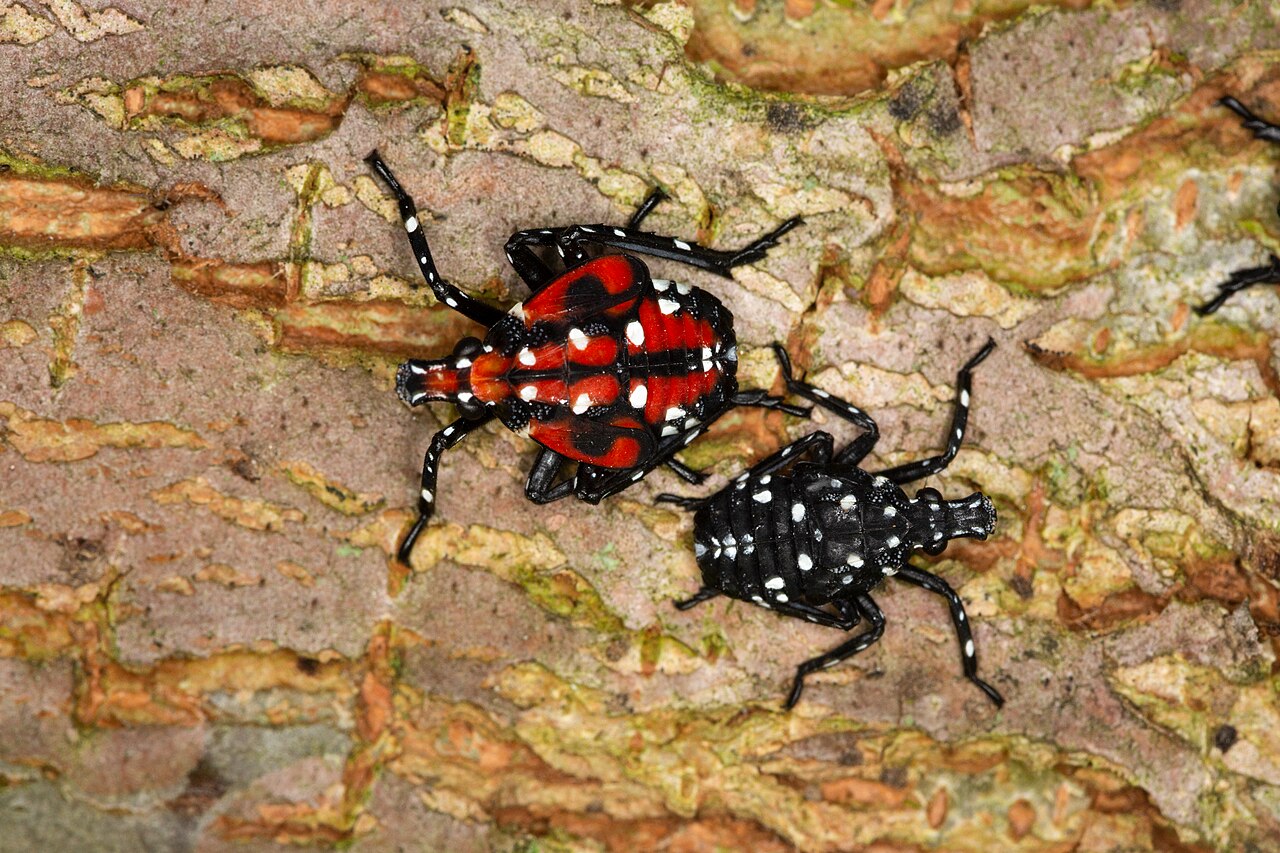
- 4th-instar nymphs: bright red with white spots and black patches (matches many backyard photos)
- Younger nymphs: black with white spots only
- Adults: gray forewings with black spots; hind wings flash red in flight
- Egg masses look like smears of gray mud on trunks, stones, and outdoor gear
Damage: Heavy sap feeding weakens grapes and fruit trees; sticky honeydew and sooty mold on leaves and fruit.
Control methods
- Crush nymphs and adults by hand (or into soapy water) when you see them.
- Scrape egg masses into a bag of rubbing alcohol or hand sanitizer from fall through spring.
- Remove or treat tree of heaven (Ailanthus) nearby — a preferred host that fuels outbreaks.
- Check cars, pots, and firewood before moving items out of infested areas.
- Report large finds to your state agriculture department if you are outside the known range.
What products to use
We list product types and what to check on the label — not brand rankings, prices, or “we tested” claims. Always follow the label for your crop, and prefer the least disruptive option that works.
Insecticidal soap or horticultural oil (nymphs)
When: Active nymphs on grapes or ornamentals you can spray thoroughly
Look for: Labeled for lanternflies or soft-bodied insects on that crop; coat the insect — contact kill only
Sticky tree bands (use with caution)
When: Nymphs climbing trunks of valued trees
Look for: Products made for lanternfly trapping; cover or use wildlife guards — bare sticky bands can catch birds and beneficials