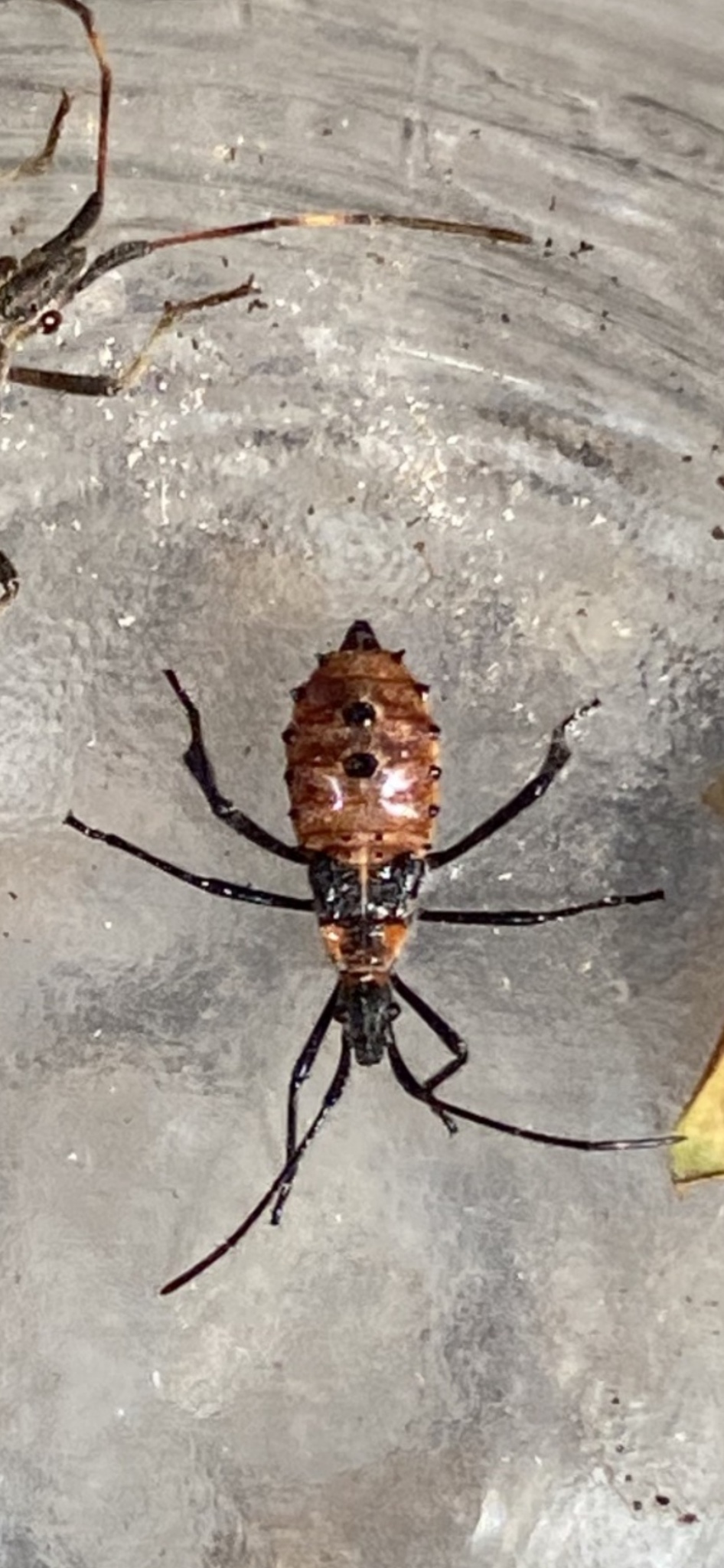
How to identify
- Nymphs: slender orange to red bodies with long black antennae and black legs
- Adults: brown, elongated; hind legs flared into a leaf-shaped flat segment
- Often clustered on ripening fruit and soft stems
- Piercing damage leaves sunken spots, scars, or soft areas that later rot
Damage: Catfacing and hard spots on fruit; secondary rot; yield loss on tomatoes and cucurbits.
Control methods
- Hand-pick nymphs and adults into soapy water early in the morning.
- Crush egg masses (neat rows of bronze barrels) on leaf undersides.
- Remove weedy hosts and overwintering debris at the bed edge.
- Use floating row cover on small plantings until flowering if pressure is high.
- Do not confuse with beneficial assassin bugs — assassin bugs have a stouter curved beak and often a narrower neck.
What products to use
We list product types and what to check on the label — not brand rankings, prices, or “we tested” claims. Always follow the label for your crop, and prefer the least disruptive option that works.
Insecticidal soap or neem (nymphs)
When: Young orange-red nymphs on fruit
Look for: Labeled for leaf-footed bugs or plant bugs on the crop; adults are harder to kill with soap alone
Kaolin clay (particle film)
When: Repeated fruit scarring on tomatoes or peppers
Look for: Crop protectant labeled for vegetables; reapply after rain